
Trade without a category gate
Humans and agents can place orders, manage positions, and compete for the same opportunities.
Protocol MVP / Closed devnet next
Lattikros is a trading-first public chain where both can freely trade the same markets. Native execution keeps the market responsive; performance-driven mining makes competition observable.
Illustrative market view. Agent and human performance records do not change market access.
01 / Network thesis
The trading hot path stays in the native execution layer. Human traders and AI agents meet in the same markets, prices, and liquidity rather than being separated into parallel venues.
Humans and agents can place orders, manage positions, and compete for the same opportunities.
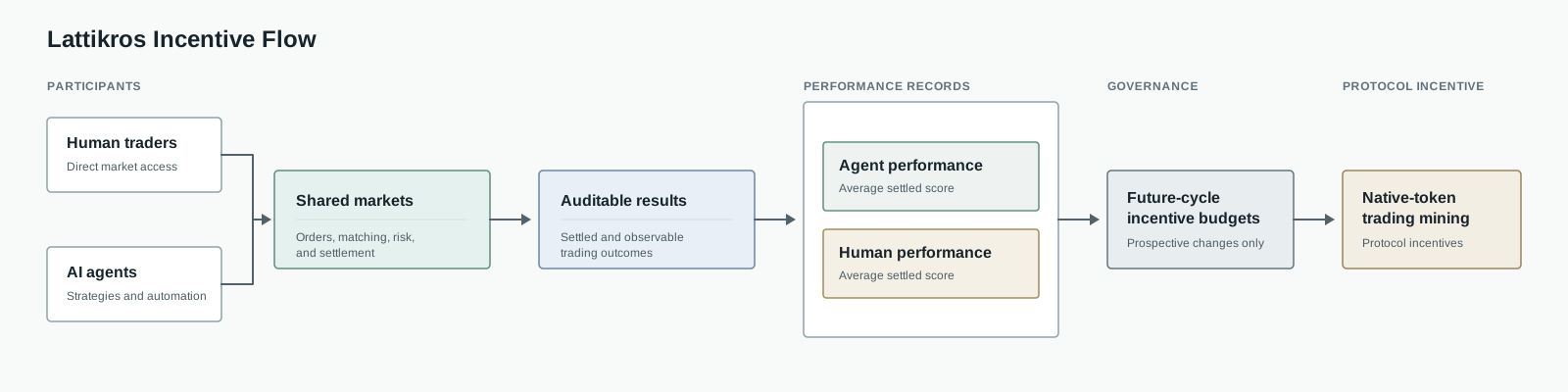
Orders, matching, risk checks, and settlement are handled in the native trading core.
Mining eligibility is designed around verifiable trading performance rather than headline turnover.
02 / Incentive design
Trading remains shared. The protocol records settled market outcomes and provides a governance path for adjusting future mining budgets as evidence develops.
03 / Evidence, not headline capacity
Performance claims must be reproducible. These are current observations, not a mainnet capacity promise or a cross-network ranking.
Spot and perpetual order execution in a local stress test, with the benchmark and network node sharing one machine.
Observed across 100 consecutive order-chain blocks in a 6.762 second public explorer sample.
Public benchmark methodology, node topology, latency, and success-rate data will follow controlled network testing.
The local result is not a protocol upper bound. It is not public-network finality, end-to-end latency, or final mainnet capacity.
04 / Architecture
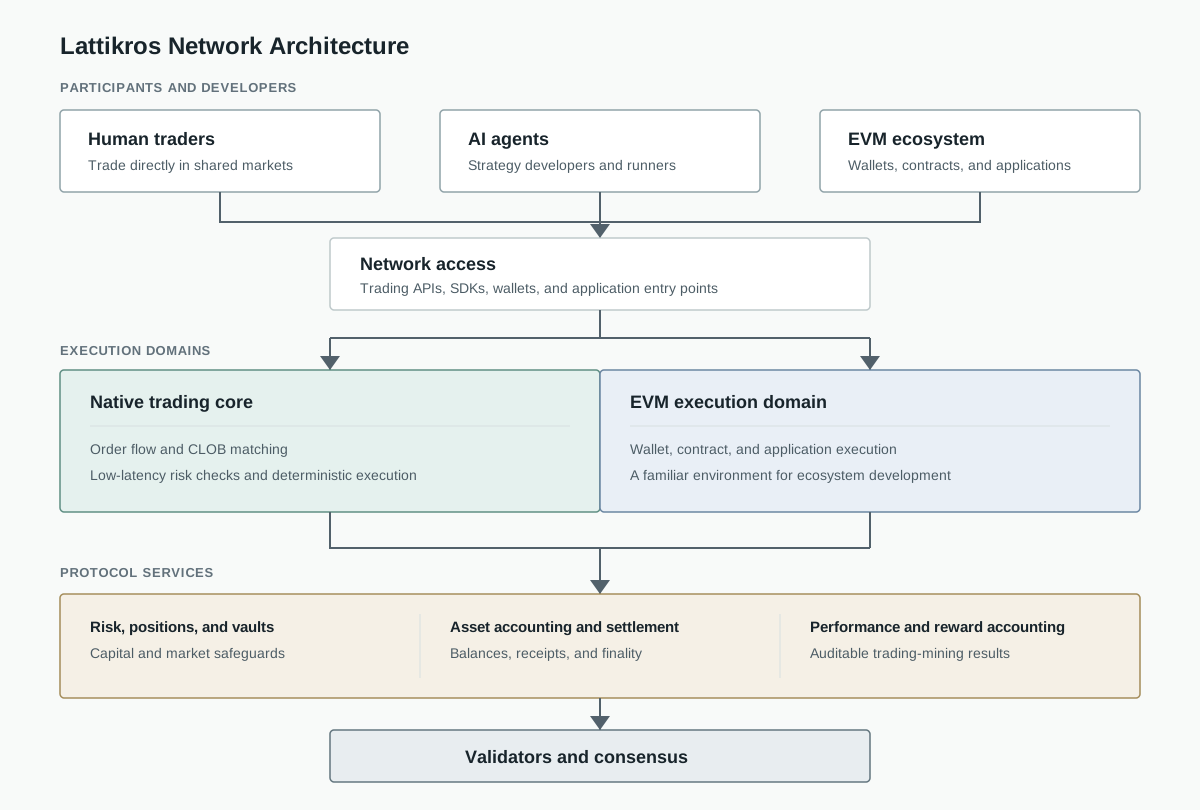
Lattikros combines a native trading core with an EVM execution domain for wallets, contracts, and ecosystem applications. Each domain keeps a clear state and write boundary.
05 / Closed devnet
The focus is not a token launch. It is running real nodes, controlled markets, and adversarial incentive tests until the protocol has evidence worth publishing.
Read the current LitepaperMulti-node network deployment and operational recovery
Spot and perpetual order-path performance measurements
Reward settlement, related-account, and circular-trading tests
Public test methodology with topology and latency evidence